Category: Where We Came From
Belorus
Belorus is bordered on its north by Lithuania.
Mozyr, located in Belarus, was, at that time, part of the Russian Empire having been acquired by Catherine II. According to the 1897 Russian Census, 69.7% of the population of Mozyr was Jewish.
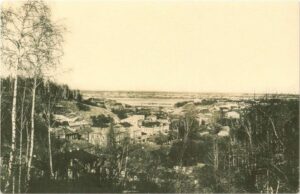
Mozyr, Mazyr,1918
Minsk is also located in Belorus.
Lithuania
During the 19th C., Lithuania consisted of seven uyezds (districts): Kaunas, Raseiniai, Telsiai, Siauliai, Panevezys, Ukmerges/Vilkomir, and Zarazai/Novoalexandrovsk.
During the occupation of Lithuania by the Russian Empire, Lithuania was divided into three main governorates, one of which was Kaunas (Kovno). The other two were Vilna (Vilnius) and Suwałki.
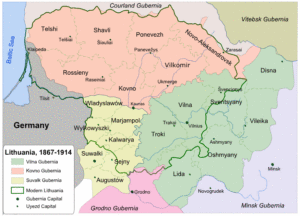
Rosseniai, one of the oldest cities in Lithuania, is a city that was, at that time, in the region or “gubernia” of Kovno, Lithuania and located west of the city of Kovno.
The city Skuodas, which Cousin Joel Tanur would call “Shkud,” is located in Klaipėda County, in northwestern Lithuania, on the border with Latvia. Click here for the history of Skuodas.
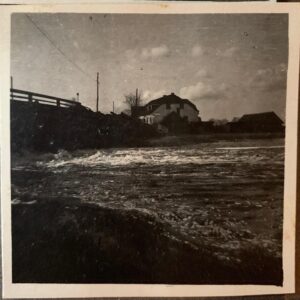
Skuodas. Mill on the river
Before Lithuania’s independence, Kaunas was generally known in English as Kovno, the traditional Slavic form of its name; the Polish name is Kowno. The traditional Russian name is Ковно although Каунас has been used since 1940. The Yiddish name is Kovne קאָװנע) while its names in German include Kowno and Kauen.
Latvia
Members of the Tanur family also lived in Latvia. Latvia and Lithuania shared a common border and both had their western borders on the Baltic Sea. Located on the Baltic Sea was the resort town of Palanga, where my grandfather was born. It had a sizeable Jewish population, and many Jewish families vacationed there in the summers.
Ukraine
The Buntman family lived in Ukraine, in Belarus. They lived in the village of Shpola, Шпола (Ukrainian), Shpole, שפּאָלע (Yiddish), a town in Cherkassy region of Ukraine. It is a geographical center of Ukraine.
East Prussia
Prior to 1871, Konigsberg was a part of East Prussia, which was a region under the control of the Kingdom of Prussia. Koenigsburg was bordered on the north by the Baltic Sea, at that time Mermel-land, Lithuania on the east, and Poland to the south. In 1871 Königsberg, now Kaliningrad, became part of Germany during the Prussian-led unification of Germany. Königsberg was home to a third of East Prussia’s 13,000 Jew when, in the Nazi era, the Polish and Jewish minorities were classified as Untermenschen and persecuted by the authorities.
See also:
PALANGA https://iajgscemetery.org/eastern-europe/lithuania/palanga